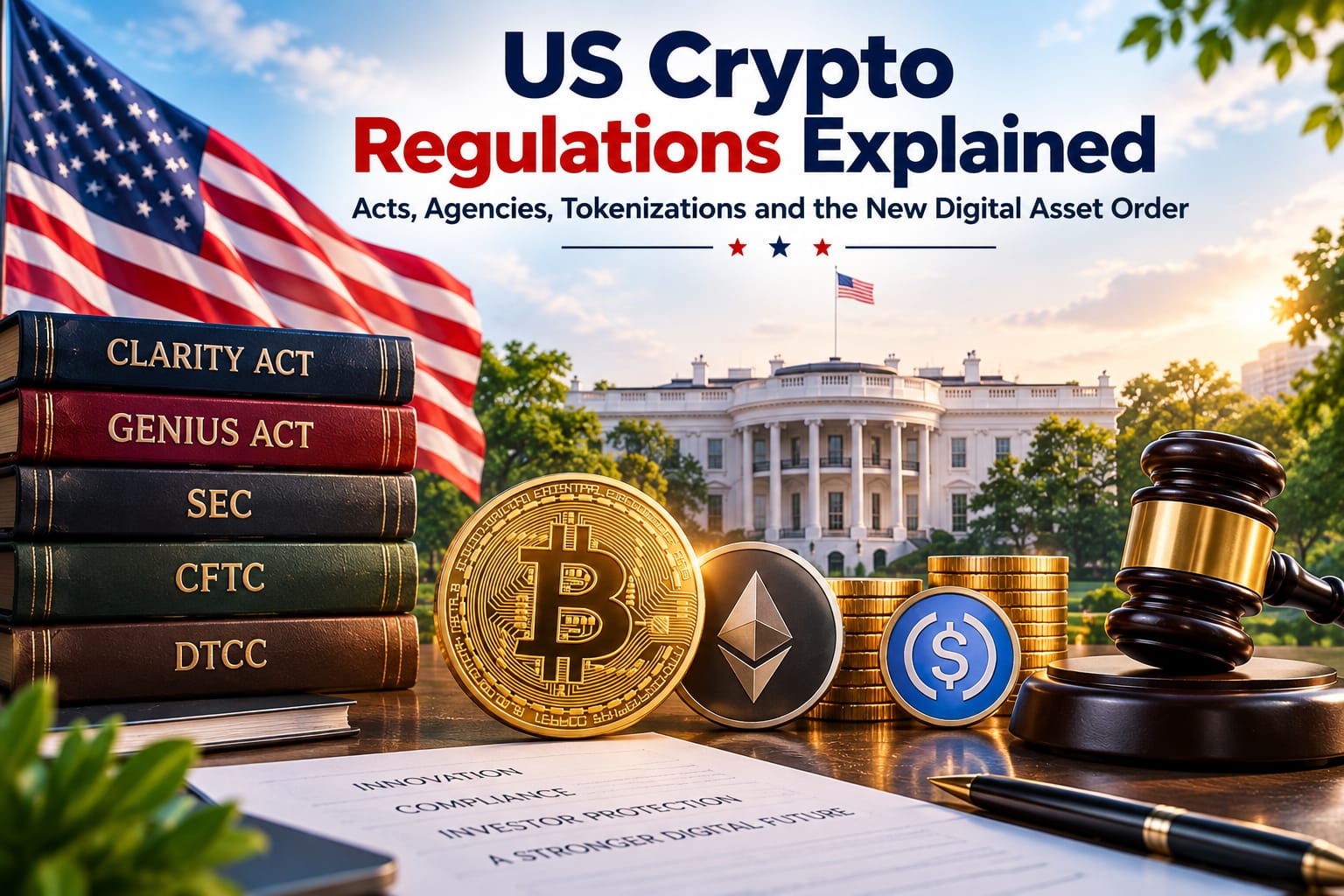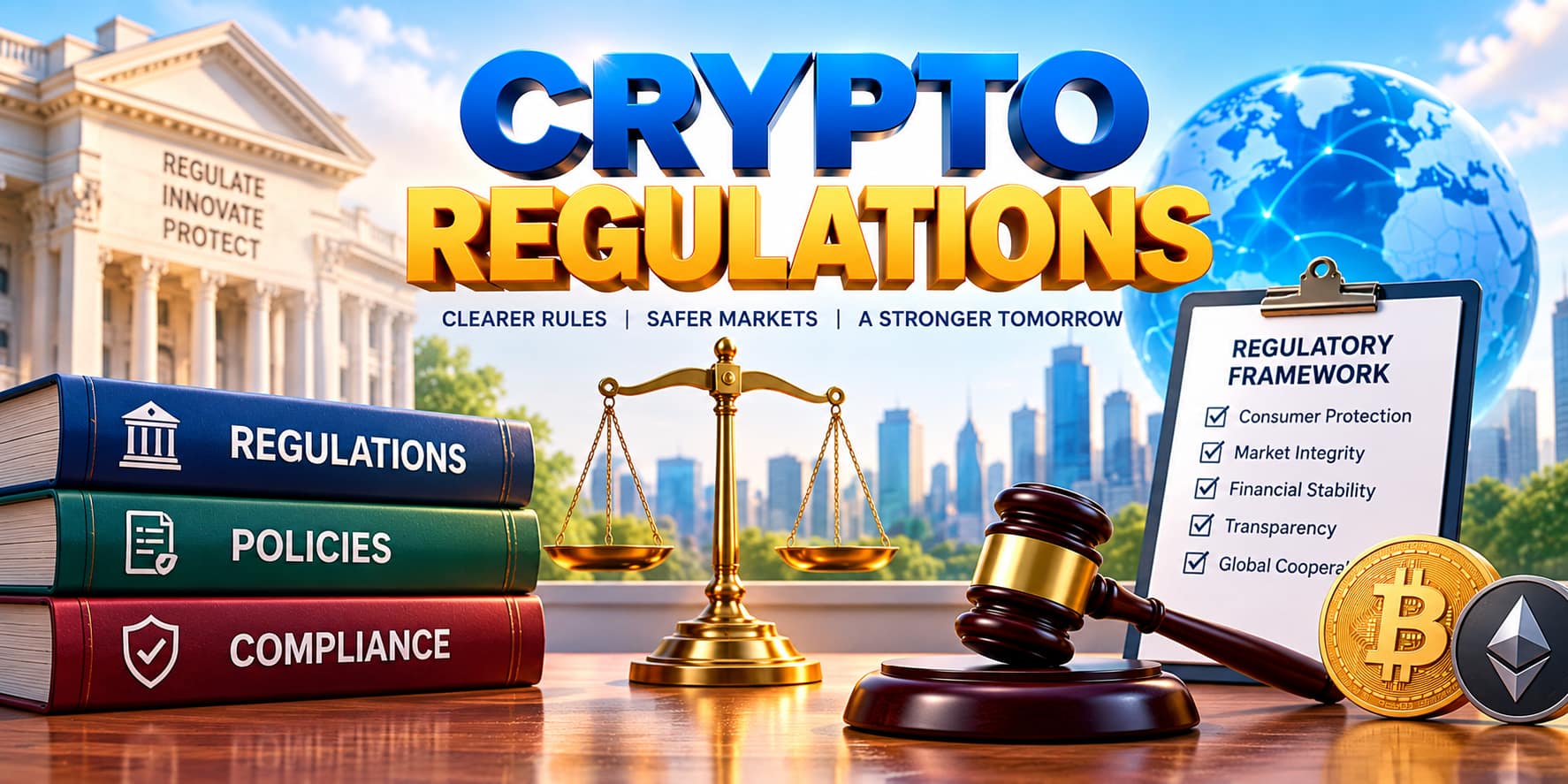
Crypto Regulations are the rules and legal frameworks that governments and financial authorities use to oversee cryptocurrencies, digital assets, crypto businesses and related financial activities. These rules can cover how crypto platforms operate, how digital assets are offered, how customers are protected and what businesses must do to meet regulatory requirements.
Unlike traditional financial markets, cryptocurrency operates across borders, so regulatory approaches can differ significantly from one country to another. Some jurisdictions have established detailed frameworks for digital assets, while others are still developing their rules or apply existing financial laws to certain crypto activities.
Understanding crypto regulations is important for anyone using an exchange, investing in digital assets, operating a crypto business or following developments in the global cryptocurrency industry.
Why Crypto Regulations Matter
Regulation creates a framework within which crypto businesses and market participants can operate. It can address areas such as consumer protection, financial crime prevention, market integrity, licensing and disclosure requirements.
For users, regulations can also determine which crypto services are available in their country and what requirements they may need to meet before using certain platforms.
How Crypto Regulations Differ by Country
There is no single global rulebook for cryptocurrency.
A country may classify certain digital assets as securities, commodities, property or another type of financial asset. It may also apply different requirements to exchanges, stablecoin issuers, custodians and other crypto businesses.
This means that a service available to users in one jurisdiction may have different conditions, restrictions or availability in another.
What Areas Can Crypto Regulation Cover?
Crypto regulation can extend across several parts of the industry, including:
- Cryptocurrency exchanges
- Digital asset custody
- Stablecoins
- Token offerings
- Crypto investment products
- Licensing and registration
- Consumer protection
- Anti-money-laundering requirements
- Market conduct and reporting
- Crypto businesses and service providers
The exact requirements depend on the jurisdiction and the type of activity involved.
Crypto Exchanges and Regulation
Crypto exchanges are among the most closely watched parts of the digital asset market. Depending on the jurisdiction, an exchange may need authorization, registration or licensing to provide particular services.
Regulatory requirements can also affect customer verification, asset custody, transaction monitoring, disclosures and the products an exchange can offer.
For users, this can directly influence which platforms and services they can access.
Stablecoin Regulation
Stablecoins have become an important area of regulatory discussion because they are designed to maintain a relatively stable value and can be widely used for trading and payments.
Regulatory frameworks may focus on areas such as reserves, redemption arrangements, disclosures, governance and risk management. The specific requirements vary between jurisdictions and stablecoin models.
Regulation and Institutional Adoption
Banks, asset managers, payment companies and other institutions generally need regulatory clarity before offering products or services involving digital assets.
Clear frameworks can make it easier for traditional financial institutions to understand their responsibilities when entering the crypto market. Regulatory uncertainty, on the other hand, can affect how quickly businesses introduce new crypto-related services.
How Regulatory Changes Affect Crypto Markets
Regulatory announcements can influence cryptocurrency markets because they may change how investors and businesses view a particular asset, service or jurisdiction.
New rules can create greater clarity for some market participants, while restrictions or enforcement actions can create uncertainty. The market reaction depends on the nature of the change, the assets involved and existing expectations.
Regulatory Developments to Watch
Crypto regulation continues to evolve as governments and financial authorities respond to developments in digital assets.
Users following the sector may therefore need to pay attention to:
- New regulatory frameworks
- Licensing requirements
- Exchange rules
- Stablecoin policies
- Digital asset classifications
- Institutional regulations
- Enforcement actions
- Changes to existing crypto laws
Because regulations can change, current information from the relevant official authority is always more reliable than relying on an old summary.
What Crypto Users Should Know
Before using a crypto service, users should understand whether the service is available and permitted in their jurisdiction and what requirements apply to them.
Regulatory status should also not be confused with a guarantee that an investment is safe or profitable. Regulation can establish rules and oversight, but cryptocurrency investments can still carry substantial market and technology risks.
What We Cover
Our Crypto Regulations category covers important regulatory developments affecting the global digital asset industry, including:
- Global Crypto Regulations
- Country-Specific Crypto Rules
- Regulatory Frameworks
- Exchange Regulations
- Stablecoin Regulation
- Digital Asset Policies
- Licensing & Compliance
- Regulatory Announcements
- Enforcement Developments
- Institutional Crypto Regulation
Disclaimer : This content is for educational and informational purposes only and is not legal or financial advice. Always verify current rules with the relevant authority.