Crypto Safety & Security

Crypto Safety & Security Guide

Cryptocurrency gives you direct control over your digital assets. But that control comes with an important responsibility: keeping your crypto safe.

Unlike many traditional financial transactions, a confirmed crypto transaction may be difficult or impossible to reverse. If someone gets access to your private key, seed phrase, or account credentials, recovering the assets may not always be possible. That is why understanding crypto safety and security is just as important as understanding how cryptocurrency itself works.

This guide explains the essential security practices that beginners, investors, and traders should understand before managing digital assets.

What Is Crypto Safety and Security?

Crypto safety and security refers to the practices used to protect cryptocurrency, wallets, exchange accounts, private keys, seed phrases, devices, and personal information from unauthorized access, theft, scams, and other security threats.

It is not about using one security feature and assuming everything is protected. Good crypto security comes from combining secure technology with careful user behaviour.

Why Is Crypto Security So Important?

Crypto transactions are generally designed to operate without requiring a bank or other intermediary to reverse a payment. This can provide users with greater control, but it also means mistakes can be costly.

Sending crypto to the wrong address, losing access to a wallet, revealing a seed phrase, or approving a malicious transaction can potentially result in permanent loss.

For that reason, security should be part of every stage of using cryptocurrency — from buying and storing crypto to sending, trading, and interacting with blockchain applications.

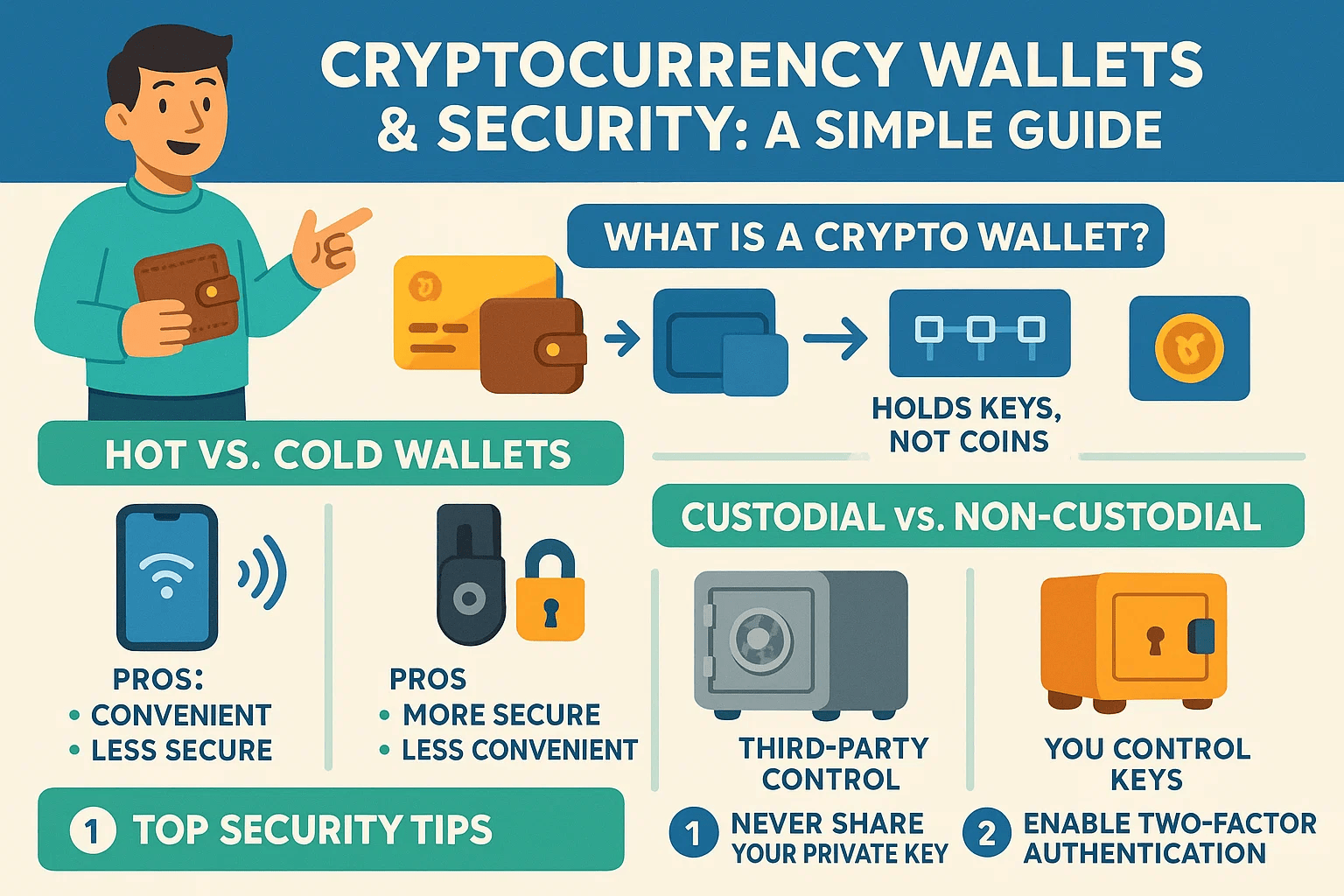
Protect Your Wallet and Private Keys

Your wallet is one of the most important parts of your crypto security setup.

The most sensitive information is your private key or recovery seed phrase. These credentials can provide control over the assets associated with the wallet.

Never share a seed phrase or private key with another person, website, customer-support representative, or online service. A legitimate wallet provider should not need your seed phrase to “unlock” your funds.

Keep recovery information stored securely and separately from the device you normally use to access your wallet.

Secure Your Exchange Accounts

If you use a cryptocurrency exchange, protect the account just as carefully as you would protect a bank or financial account.

Use a strong, unique password and enable two-factor authentication (2FA) where available. Keep your email account secure as well, because access to your email can sometimes provide a pathway to other accounts.

Avoid logging into an exchange through links sent in unexpected emails, messages, advertisements, or social-media posts. Instead, access the official website or application directly.

Understand Phishing and Crypto Scams

Many crypto security incidents do not begin with sophisticated hacking. They begin with social engineering.

Scammers may impersonate exchanges, wallet providers, developers, customer support teams, influencers, or even people you know.

Be particularly cautious when someone:

  • Creates a sense of urgency
  • Promises guaranteed returns
  • Requests your seed phrase or private key
  • Sends an unexpected wallet or login link
  • Claims your account will be suspended unless you act immediately
  • Offers unrealistic giveaways, rewards, or investment opportunities

When something looks suspicious, stop and verify it through an independent and trusted source.

Check Every Crypto Transaction

Before sending cryptocurrency, carefully verify the wallet address, network, asset, and amount.

Crypto addresses can be long and difficult to read, so copying an address without checking it can create unnecessary risk. Some malicious software can also attempt to replace copied wallet addresses.

For a new recipient or a significant transaction, users may consider sending a small test amount first, where practical.

Be Careful With Wallet Connections and Smart Contracts

Connecting a wallet to a website does not automatically mean the website is trustworthy.

DeFi platforms, NFT applications, token services, and other blockchain applications may require users to approve transactions or grant permissions.

Before signing or approving anything, understand what you are authorizing and which assets or permissions may be involved. Avoid connecting your wallet to unknown applications simply because they promise rewards or high returns.

Hot Wallets vs. Cold Storage

A hot wallet is connected to the internet and is generally convenient for regular transactions.

A cold or hardware wallet keeps private keys in a more isolated environment and can provide an additional layer of protection for assets that do not need frequent access.

Neither option makes crypto completely risk-free. The appropriate setup depends on how frequently the assets are used, the amount being held, and the user’s ability to manage the security process correctly.

Protect the Device You Use for Crypto

Your wallet or exchange account can be affected if the device used to access it is compromised.

Keep your operating system, browser, wallet software, and security tools updated. Avoid installing unknown applications or browser extensions, particularly on a device used to manage significant crypto assets.

Be cautious when using public or unfamiliar networks for sensitive financial activity.

Keep Secure Backups

Losing a phone or computer does not necessarily mean losing a wallet if the recovery information has been securely backed up.

At the same time, storing a seed phrase carelessly can create another security risk.

The objective is to maintain a secure and reliable recovery method without keeping sensitive credentials in easily accessible locations such as ordinary notes, screenshots, public cloud documents, or messages.

Crypto Security Is an Ongoing Process

Security does not end after setting up a wallet or enabling 2FA.

New scams, malicious websites, compromised applications, and other threats continue to appear. Before making an unfamiliar crypto transaction or using a new service, take a moment to verify what you are doing.

A simple habit can make a significant difference:

Stop → Verify → Understand → Then Approve.

A Practical Security Checklist

Before managing your crypto, make sure you can answer “yes” to the important basics:

  • Is my exchange account protected with a strong password and 2FA?
  • Is my wallet recovery information stored securely?
  • Have I kept my private key and seed phrase completely private?
  • Am I using the genuine website or application?
  • Have I checked the recipient address and network?
  • Do I understand what I am approving in a wallet transaction?
  • Are my devices and software updated?
  • Do I have a secure recovery plan?

If you cannot confidently answer these questions, improving your security setup should come before taking unnecessary risks with your assets.

Final Thoughts

Crypto security is ultimately about protecting access, verifying information, and avoiding preventable mistakes.

There is no single tool that can guarantee complete protection. Strong account security, secure wallet management, careful transaction checks, safe device practices, and awareness of scams work together to create a stronger security approach.

Whether you are a beginner buying your first cryptocurrency, an investor holding assets for the long term, or an active trader, learning basic security practices is an essential part of using crypto responsibly.

Frequently Asked Questions

What should I do if someone asks for my crypto seed phrase?

Do not share it. Your seed phrase is highly sensitive recovery information. Treat any request for it as a major security warning and verify the situation independently.

What should I do if I accidentally send crypto to the wrong address?

Blockchain transactions may not be reversible. If the address belongs to an exchange or identifiable service, contact its official support immediately. Never trust someone who privately contacts you promising to recover the funds for an upfront payment.

Is keeping crypto on an exchange safe?

Exchanges use security measures to protect user accounts, but keeping assets on an exchange still involves platform and account risks. Users should understand the security practices and risks of the specific service they use.

Is a hardware wallet completely safe?

No. Hardware wallets can provide strong protection for private keys, but users can still lose funds through phishing, fraudulent transactions, lost recovery information, or incorrect wallet management.

What is the safest way to protect a seed phrase?

Keep it private and store it securely in a way that protects it from unauthorized access, loss, and physical damage. Do not share it or store it casually in screenshots, messages, or easily accessible online documents.

Disclaimer: This content is for educational and informational purposes only and is not financial or investment advice. Always verify information independently and use caution when handling cryptocurrency and digital assets.