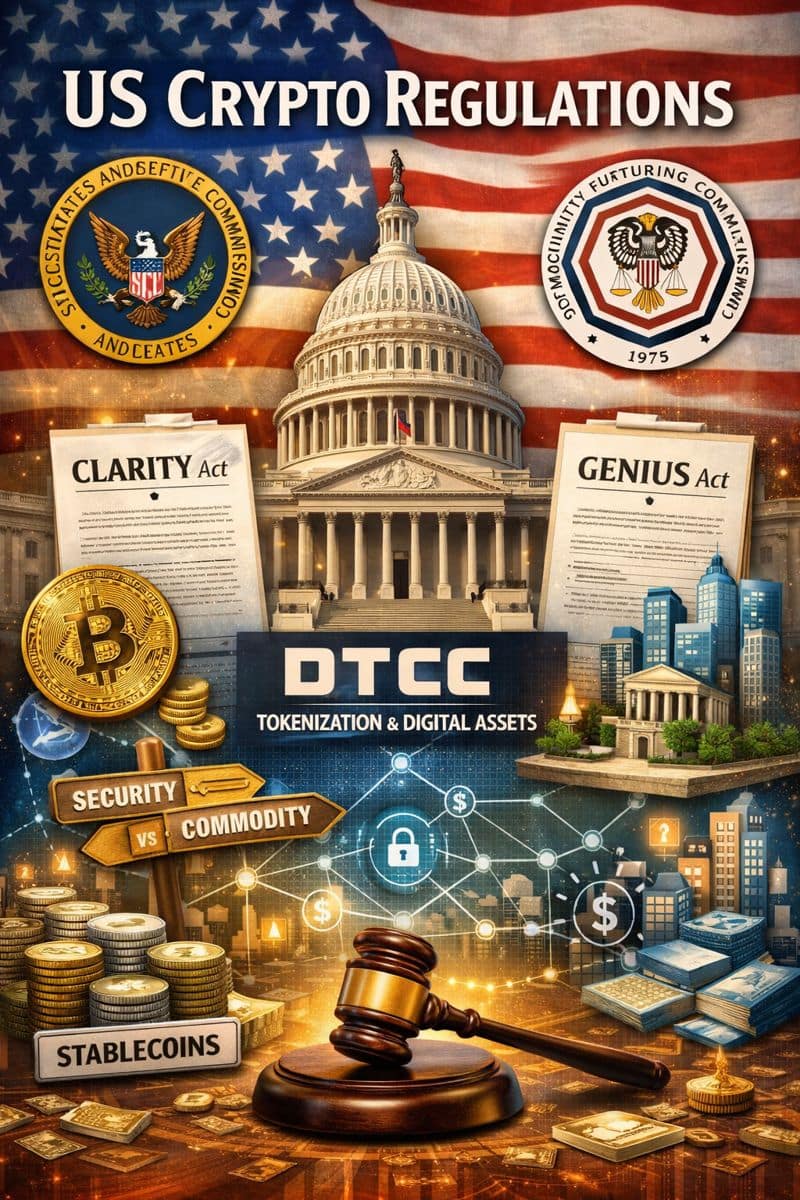
Lawmakers in the United States are accelerating efforts to bring clarity to cryptocurrency regulation ahead of 2026. Key legislative actions underway include renewed progress on the CLARITY Act, which aims to clearly define the regulatory boundaries between the SEC and CFTC, helping determine which agency oversees different types of digital assets.
The SEC is also working on an “innovation exemption” framework, designed to speed up crypto product testing while reducing regulatory friction. Meanwhile, the GENIUS Act is advancing, targeting structured licensing standards for stablecoins, stronger custody protections, capital requirements, and clearer operational models for crypto service providers.
Beyond federal moves, several U.S. states are also stepping up crypto regulation. California is progressing with licensing frameworks, while Texas continues to develop Bitcoin reserve initiatives. Additionally, proposed tax reforms intend to simplify areas such as staking rewards, lending services, and small crypto payments — potentially boosting broader market participation.
However, uncertainty remains. The upcoming U.S. elections, potential changes in Federal leadership, and evolving state regulations could shift timelines or policy direction. While momentum is strong, these factors may influence how quickly reforms are finalized.
Market Outlook
- Investor Sentiment: Neutral, but cautiously optimistic
- Potential Market Impact: Significant, especially for stablecoins, institutional adoption, and regulated crypto services