How to Protect Your Digital Assets in 2025
Cryptocurrency offers financial freedom and decentralization, but it also comes with unique security risks. Unlike traditional banking systems, crypto transactions are irreversible, and users are fully responsible for protecting their assets. This makes crypto safety knowledge essential for every investor and trader.
Whether you are a beginner or an experienced user, following basic security practices can significantly reduce the risk of hacks, scams, and accidental losses.
🛡️ Core Principles of Crypto Safety
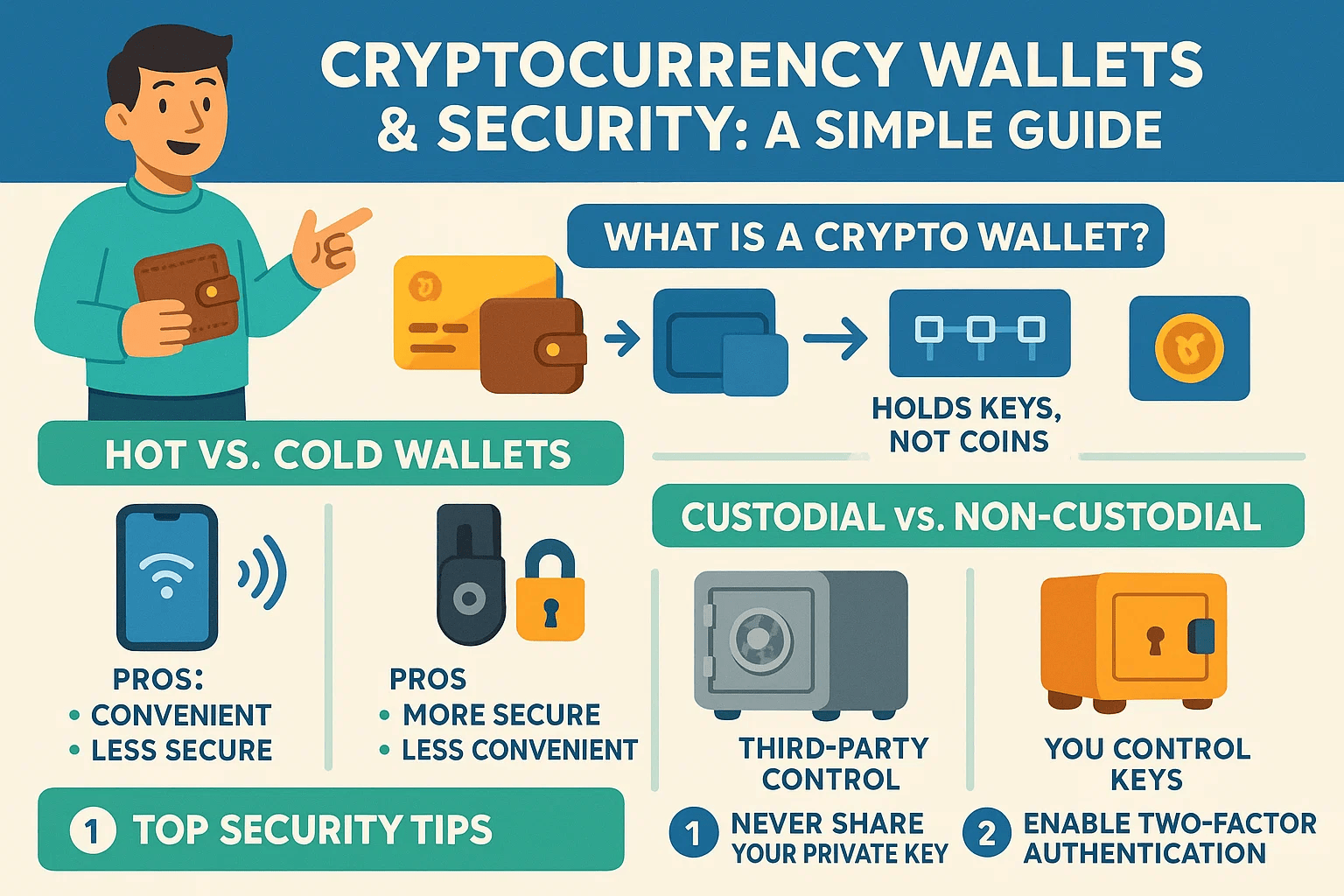
1. Control Your Private Keys
If you do not control your private keys, you do not truly own your crypto. Always use trusted wallets and avoid storing large funds on exchanges.
2. Use Strong Wallet Security
- Enable two-factor authentication (2FA)
- Use hardware wallets for long-term storage
- Protect seed phrases offline
3. Verify Before You Trust
Always double-check:
- Website URLs
- Smart contract addresses
- Social media accounts
Scammers often impersonate real platforms with minor spelling changes.
⚠️ Common Security Risks to Avoid
- Clicking unknown links
- Connecting wallets to unverified websites
- Sharing seed phrases or private keys
- Falling for “guaranteed profit” promises
Remember: No legitimate platform will ever ask for your private keys.
🔍 Safe Trading & Investment Practices
- Start with small amounts
- Diversify assets across wallets
- Use reputable exchanges only
- Regularly update wallet software
Taking a slow, cautious approach is safer than chasing fast profits.
✅ Best Habits for Long-Term Crypto Safety
- Bookmark official websites
- Follow verified project announcements
- Keep backups of recovery phrases
- Stay informed about new scam methods
Crypto safety is not a one-time setup — it is an ongoing habit.


