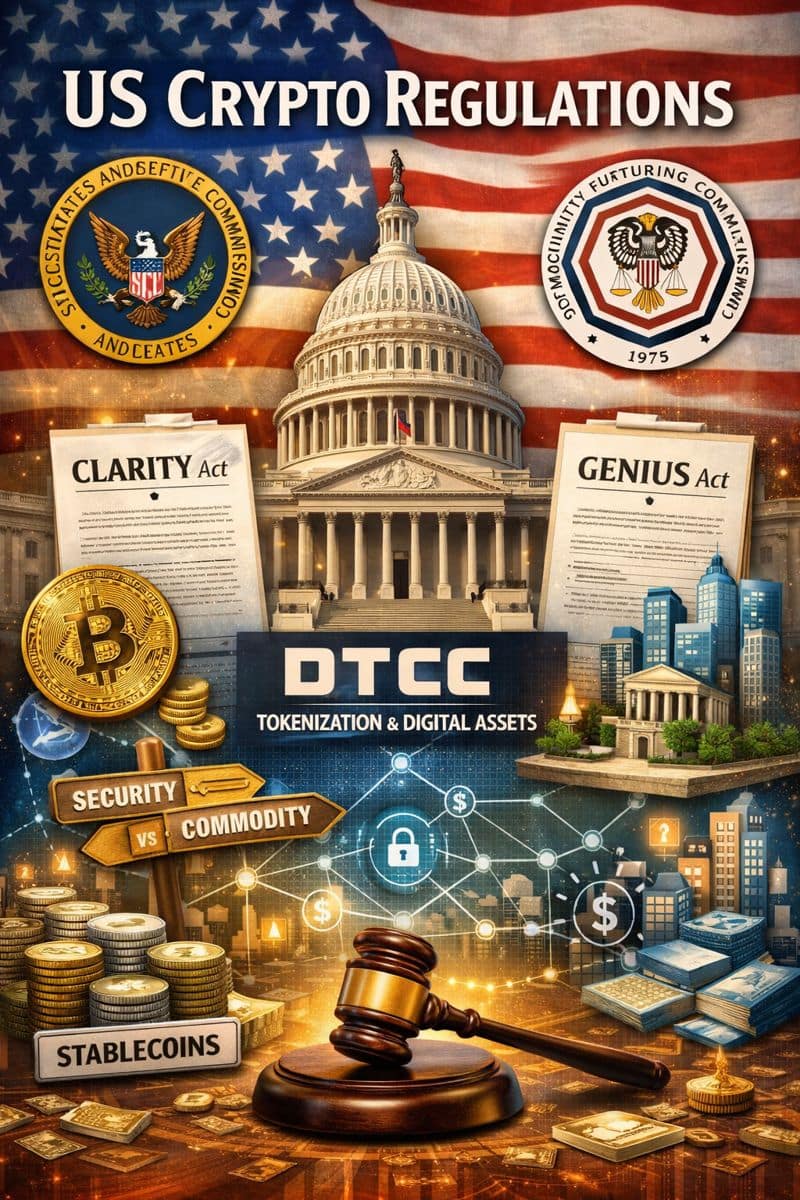
The White House is reportedly reconsidering its support for the long-awaited U.S. crypto market structure legislation, triggering fresh uncertainty across digital asset markets.
Sources familiar with the matter say the administration has warned it may withdraw backing if industry leaders fail to align on key regulatory issues—especially stablecoin rules and yield frameworks.
📜 What the Crypto Market Structure Bill Proposes
The proposed Digital Asset Market Structure Framework aims to create clear federal oversight for cryptocurrencies and digital assets in the United States.
🔹 Defines regulatory boundaries between the U.S. Securities and Exchange Commission and Commodity Futures Trading Commission
🔹 Provides legal clarity for crypto exchanges, stablecoin issuers, and tokenized assets
🔹 Seeks to accelerate institutional adoption and market stability
Lawmakers view the bill as a cornerstone for long-term crypto regulation in the U.S.
⚠️ Coinbase Pushback Triggers Political Tension
The debate intensified after Coinbase CEO Brian Armstrong publicly opposed the bill, stating he would “prefer no bill over a flawed one.”
🚨 Coinbase’s key objections include:
🟡 Unequal treatment of crypto vs traditional finance
🟡 Lack of stablecoin yield clarity
🟡 Restrictions on tokenized equities
🟡 Broad government access to user financial data
Following Armstrong’s remarks, the Senate Banking Committee postponed the bill’s markup.
🏛️ White House Reaction & Political Stakes
Officials inside the White House reportedly expressed frustration, calling Coinbase’s stance a setback for both the administration and the broader crypto industry.
📌 The bill is closely linked to Donald Trump, adding political weight to its fate.
📌 Failure to reach consensus could stall federal crypto reform for years.
As of now, no official statement has been issued by the White House or Senate Banking Committee.
📉 Why This Matters for Crypto Markets
If White House support is withdrawn, analysts warn of major consequences:
🔻 Prolonged regulatory uncertainty
🔻 Increased enforcement-driven oversight
🔻 Capital and innovation moving offshore
🔻 Delays in stablecoin and tokenization frameworks
The future of U.S. crypto regulation now depends on whether policymakers and industry leaders can bridge widening policy gaps.