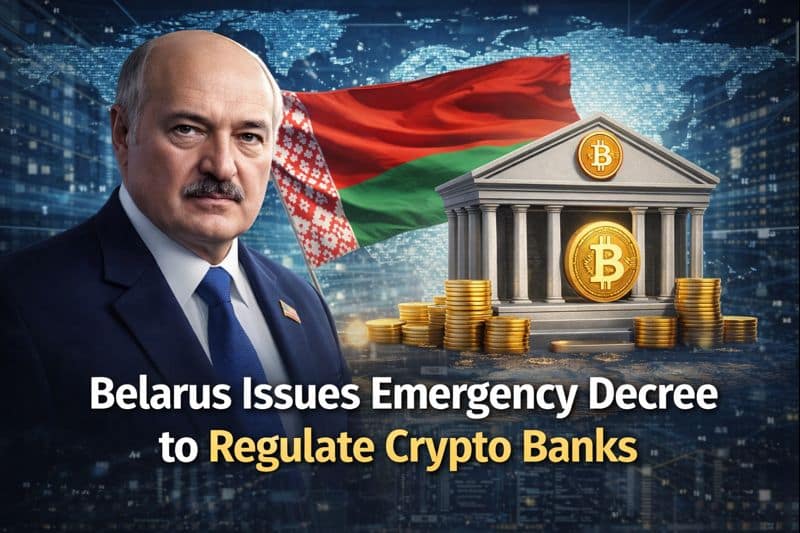
Belarus has taken a major regulatory step in the digital asset space by introducing a new emergency decree aimed at formally regulating cryptocurrency banks and digital token operations across the country.
According to official sources, President Alexander Lukashenko signed Decree No. 19 on January 16, setting clear rules for crypto-focused financial institutions. The move strengthens government oversight while positioning Belarus as a structured hub for blockchain-based finance.
🔍 What the New Crypto Decree Covers
📜 The decree legally defines cryptocurrency banks as joint-stock companies, allowing them to operate with digital tokens in:
- 💳 Banking services
- 💰 Digital payments
- 🔗 Token-related financial activities
However, entry into the market comes with strict compliance requirements.
🏢 Requirements for Crypto Banks in Belarus
To operate legally, crypto banks must:
✅ Obtain resident enterprise status
✅ Register within the country’s High-Tech Park (HTP)
✅ Be listed in the National Bank’s official registry
✅ Follow rules applicable to non-bank financial institutions
✅ Comply with oversight from the HTP Supervisory Board
These measures aim to ensure transparency, risk control, and regulatory discipline.
🌍 Why This Matters for the Global Crypto Market
📊 Belarus’ approach reflects a broader global trend — regulate, don’t ban. By offering a legal pathway for crypto banks, the country is attempting to:
- 🔐 Reduce unregulated crypto activity
- 🧩 Provide legal clarity for institutions
- 🚀 Encourage controlled blockchain innovation
Market analysts say the framework could attract select institutional players while keeping speculative risks in check.
📈 Market Outlook
While the decree does not guarantee immediate large-scale adoption, it establishes a foundation for regulated crypto banking in Eastern Europe, potentially influencing regional policy discussions.
⚠️ Disclaimer:
This content is for informational purposes only and should not be considered financial or investment advice.


