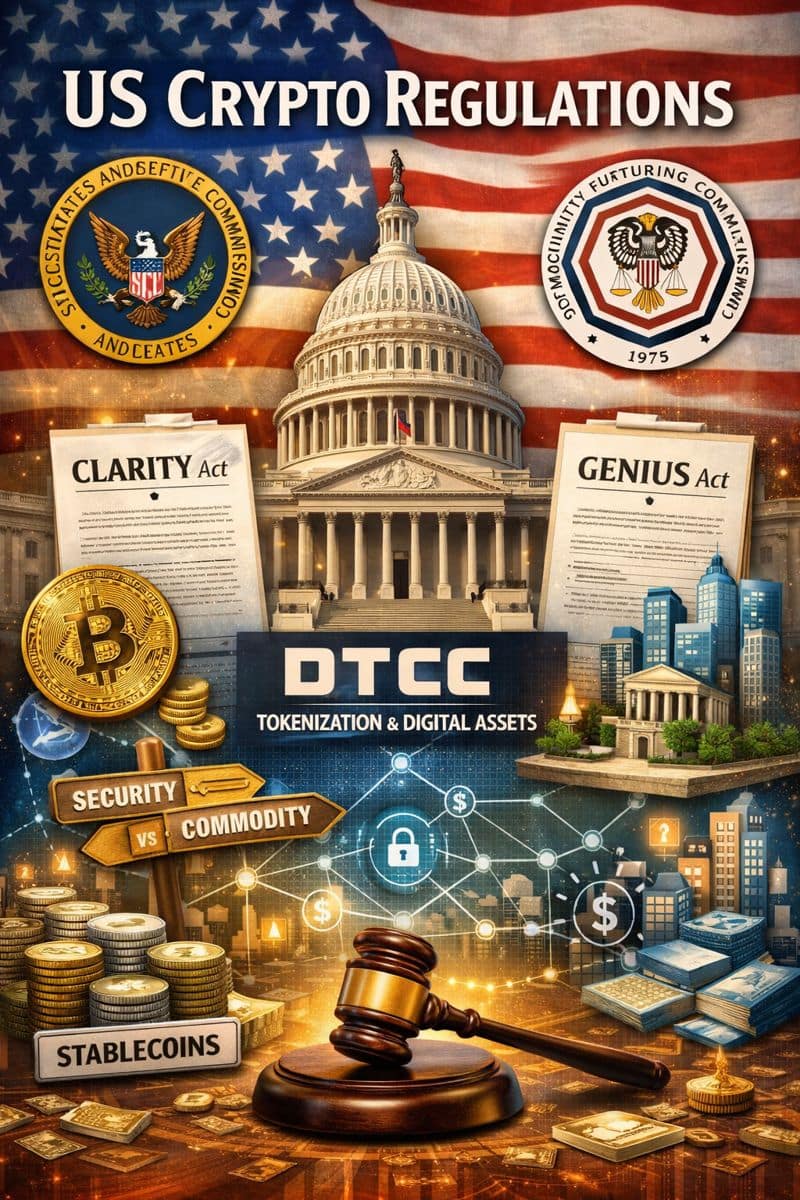
The U.S. crypto regulatory environment is witnessing a major strategic shift as the Securities and Exchange Commission (SEC) and the Commodity Futures Trading Commission (CFTC) move away from jurisdictional conflicts and towards stronger collaboration.
Reports indicate that the SEC, led by Chairman Paul Atkins, is prioritizing clearer crypto structure through initiatives such as a token classification framework, Project Crypto, ETF approval standards, and asset tokenization policies. Meanwhile, under Chairman Michael Selig, the CFTC is fast-tracking regulatory clarity through the Crypto Sprint program, positioning itself to take a greater role in supervising crypto commodities like Bitcoin.
Industry analysts believe that by 2026, the United States may operate a dual-track regulatory system, combining SEC-driven institutional innovation with CFTC-led market expansion oversight. Experts say this level of cooperation between both regulators is unprecedented and may define the direction of U.S. crypto regulation in the coming years.